- English
- Español
- Português
- русский
- Français
- 日本語
- Deutsch
- tiếng Việt
- Italiano
- Nederlands
- ภาษาไทย
- Polski
- 한국어
- Svenska
- magyar
- Malay
- বাংলা ভাষার
- Dansk
- Suomi
- हिन्दी
- Pilipino
- Türkçe
- Gaeilge
- العربية
- Indonesia
- Norsk
- تمل
- český
- ελληνικά
- український
- Javanese
- فارسی
- தமிழ்
- తెలుగు
- नेपाली
- Burmese
- български
- ລາວ
- Latine
- Қазақша
- Euskal
- Azərbaycan
- Slovenský jazyk
- Македонски
- Lietuvos
- Eesti Keel
- Română
- Slovenski
- मराठी
- Srpski језик
What Gym Equipment Can Effectively Train the Pectoralis Major?
Chest training is almost always the first strength training exercise for every fitness enthusiast. Well-developed pectoralis majors are not only aesthetically pleasing but also play an indispensable role in bodily function. The pectoralis major is involved in almost any movement involving pushing off the body. For example, in the simple action of raising an arm, while the deltoids are responsible for raising the arm overhead, the pectoralis major also needs to cooperate. Furthermore, as a major muscle group in the upper body, the pectoralis major also plays a role in balancing the body. Insufficient training of the pectoralis major can not only lead to sports injuries but also cause serious compensatory mechanisms in the body. So, what equipment can effectively train chest muscles?
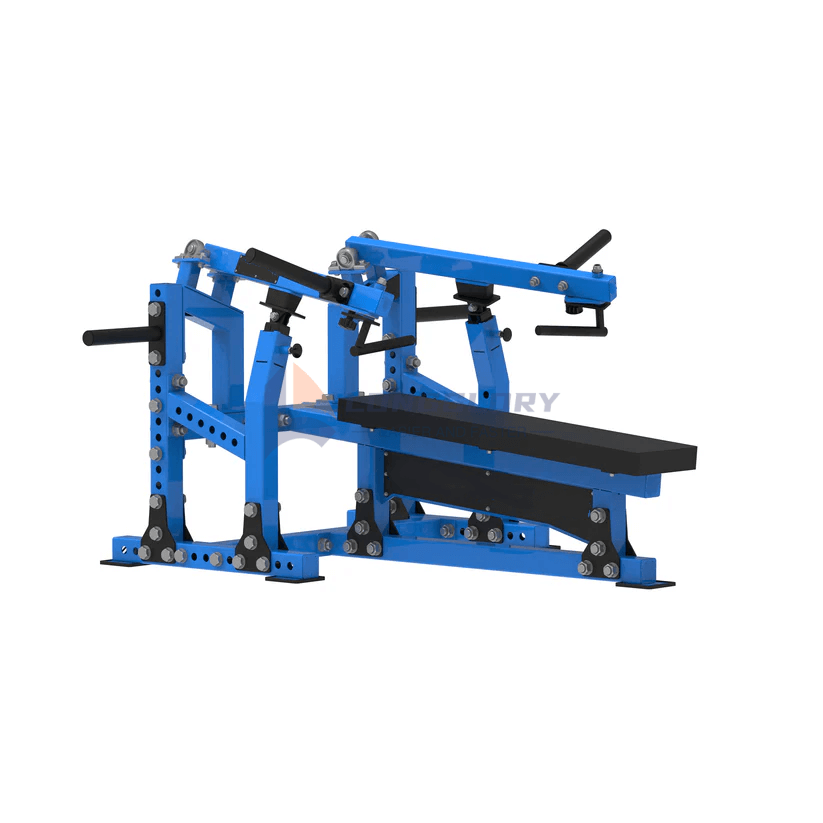
Instructions
1. A wide grip is generally used for the barbell bench press to allow for a fuller stretch and contraction of the pectoralis major. The torso and upper body should be arched, shoulders fully depressed, and the barbell positioned about 1cm above the nipples. When pushing the barbell up until arms are fully extended, the pectoralis major must be in a peak contraction state; pause briefly.
2. Exhale as you push up, and inhale through your mouth as you return to the starting position.
Precautions:
1. Do not lift your hips and lower back off the bench.
2. Foot position: Legs should be spread at a 45-degree angle, flat on the ground for support.
3. Different grip widths target different muscles: a grip slightly narrower than shoulder-width works the middle pectoralis major and triceps; a grip shoulder-width works the entire pectoral muscles; a grip slightly wider than shoulder-width works the outer pectoral muscles; and a wider grip primarily targets the posterior deltoid.
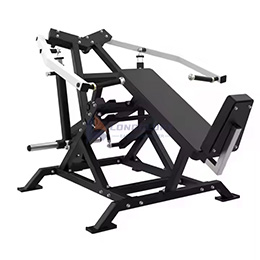
Instructions:
1. Lie supine on a 30°-40° incline bench with your feet on the ground and your back pressed against the bench. Keep your chest up and abs engaged.
2. Grip the barbell with your palms facing up, using a slightly wider grip.
3. Extend your arms straight up to support the barbell, slowly lowering it to just above your chest (near your collarbone). Inhale as you lower the barbell.
4. As the barbell touches your chest, begin the upward push, exhaling as you push.
Note: The angle of the incline bench affects the effectiveness of the exercise for the chest. Pushing the barbell close to the nipples is best for training the inner and outer pectoralis major; pushing it close to the collarbone area is most effective for training the upper pectoralis major, which is the optimal recommendation for the incline bench press.
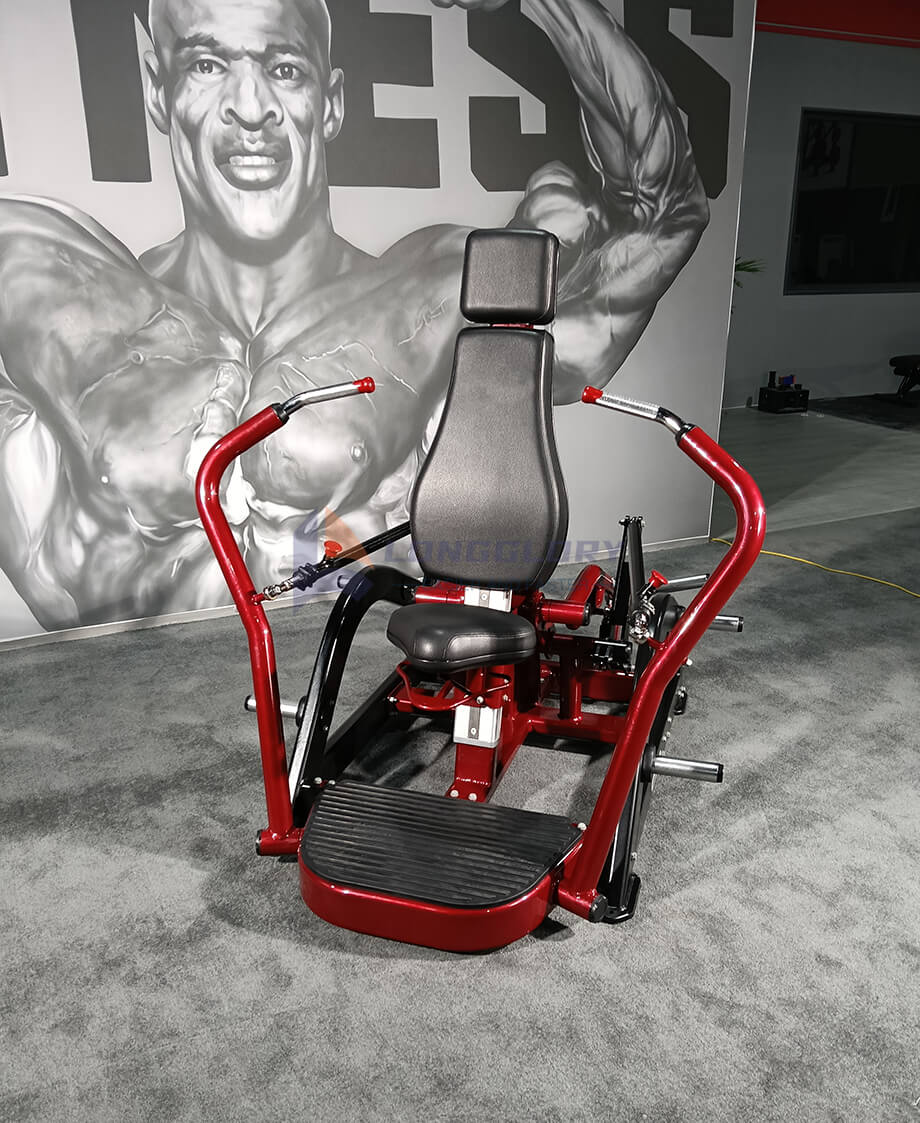
III. Seated Chest Press Machine
Instructions: First, adjust the machine's seat to a suitable height. The standard is that the handle height is the same as the top of your chest. Then adjust the weight. After sitting on the seat, keep your head, upper back, and buttocks firmly against the backrest, tighten your lower back forward, then lift your chest and tighten your abdomen. Keep your eyes looking straight ahead, grip the handles firmly, and then inhale deeply, feeling your chest muscles engage as you push the weight up while exhaling. At the top of the push, do not fully extend your elbows. Pause for one second, then return to the starting position while inhaling. Return to the starting position when your upper arms are in a straight line, then push again. Repeat this exercise.
Precautions:
1. Be careful not to fully extend your elbows when pushing the weight up, otherwise you may injure your elbows when you reach muscle fatigue.
2. Keep your shoulders relaxed throughout the push and return movements to avoid strain. Otherwise, your shoulder muscles will be involved, reducing the effectiveness of the chest workout.
IV. Pec Deck Machine Chest Press
Instructions:
1. Sit upright on the fixed bench of the Pec Deck Machine, keeping your upper body straight, chest out, abs engaged, and lower back tight. Your forearms should be firmly against the pads of the forearm resistance bands, perpendicular to the ground, with your upper arms parallel to the ground.
2. Exhale as you simultaneously squeeze your arms towards your chest, trying to bring the two resistance bands together. Hold for 2 seconds, then inhale and slowly return to the starting position (avoid sudden, excessive force).
Precautions:
1. Keep your body straight, without external assistance. Use your pectoralis major muscles to engage when squeezing the handles inward, and relax gently when returning to the starting position.
2. Keep your elbows pointing backward and outward throughout the movement, not downward.
3. The seat height should be appropriate; otherwise, if the handles are too high, it will primarily target the deltoid muscles.
4. When the handles are almost touching, pause briefly. You can intensify the stimulation to your pectoral muscles by clenching your chest muscles as much as possible, or by separating them slightly.
5. Cable Crossover
This exercise targets the lower and outer chest muscles. First, attach the hand straps to both sides of the cable crossover machine. Stand with your legs apart, knees slightly bent, hands gripping the handles, elbows slightly bent, arms extended forward and downward. Inhale as you raise your arms outward and upward until they are parallel to the ground. Pause briefly, then exhale and pull the hand straps back to the starting position. The entire pull-down motion should form an upward-facing semi-circular trajectory in front of your body.
The key points are the same as the previous exercise, except the cables are fixed to the lower part of the cable crossover machine, and the target muscle is now the upper pectoralis major.